
Subak: The Ancient System Behind Bali’s Rice Terraces
Bali’s rice terraces are among the island’s most recognisable landscapes. However, behind the layered fields and flowing waterways is a sophisticated system. For centuries, it has connected agriculture, community, nature, and spirituality.
This system is known as subak. It manages irrigation water through networks of canals, tunnels, weirs, rice terraces, and water temples. Subak is more than an agricultural method. It reflects a way of living in which people share resources, communities work together, and nature is an essential part of life.
The system dates back more than a thousand years. Today, it continues to shape parts of Bali’s cultural landscape.
What Is Subak?
Subak is a traditional Balinese system for managing irrigation water used by rice farmers.
Farmers do not manage water independently. Instead, communities work collectively to distribute water from rivers, springs, and other sources to agricultural areas. The water moves through interconnected canals and irrigation structures before it reaches the rice fields.
The system is also closely connected with temples and religious practices. Water temples play an important role in coordinating water management and the agricultural cycle. In this way, they link practical farming with spiritual life.
A System Built Around Community
One of the most distinctive aspects of subak is its communal nature.
Farmers form self-governing associations. These associations collectively manage water distribution and agricultural responsibilities. Traditional rules set out the rights and responsibilities of members, which helps communities coordinate the use of a shared resource.
This means that the rice terraces are not simply individual pieces of farmland. Instead, they form part of a much larger system. In that system, decisions about water affect an entire community.
UNESCO describes subak as a democratic and egalitarian system. According to UNESCO, communities organise water management collectively around networks of water temples.
How Does Water Reach the Rice Fields?
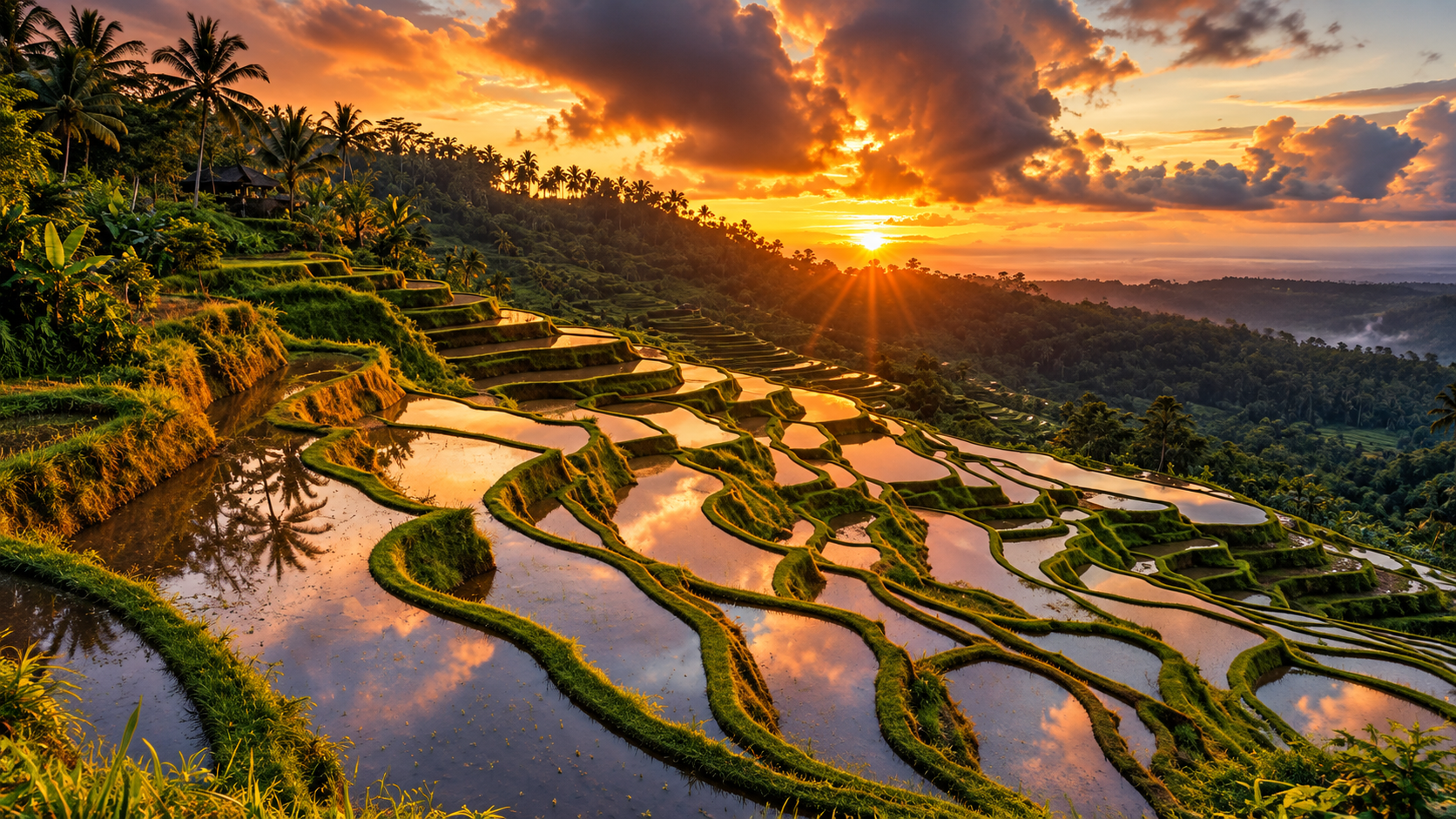
Bali’s volcanic landscape naturally supports the movement of water from higher areas towards lower ground.
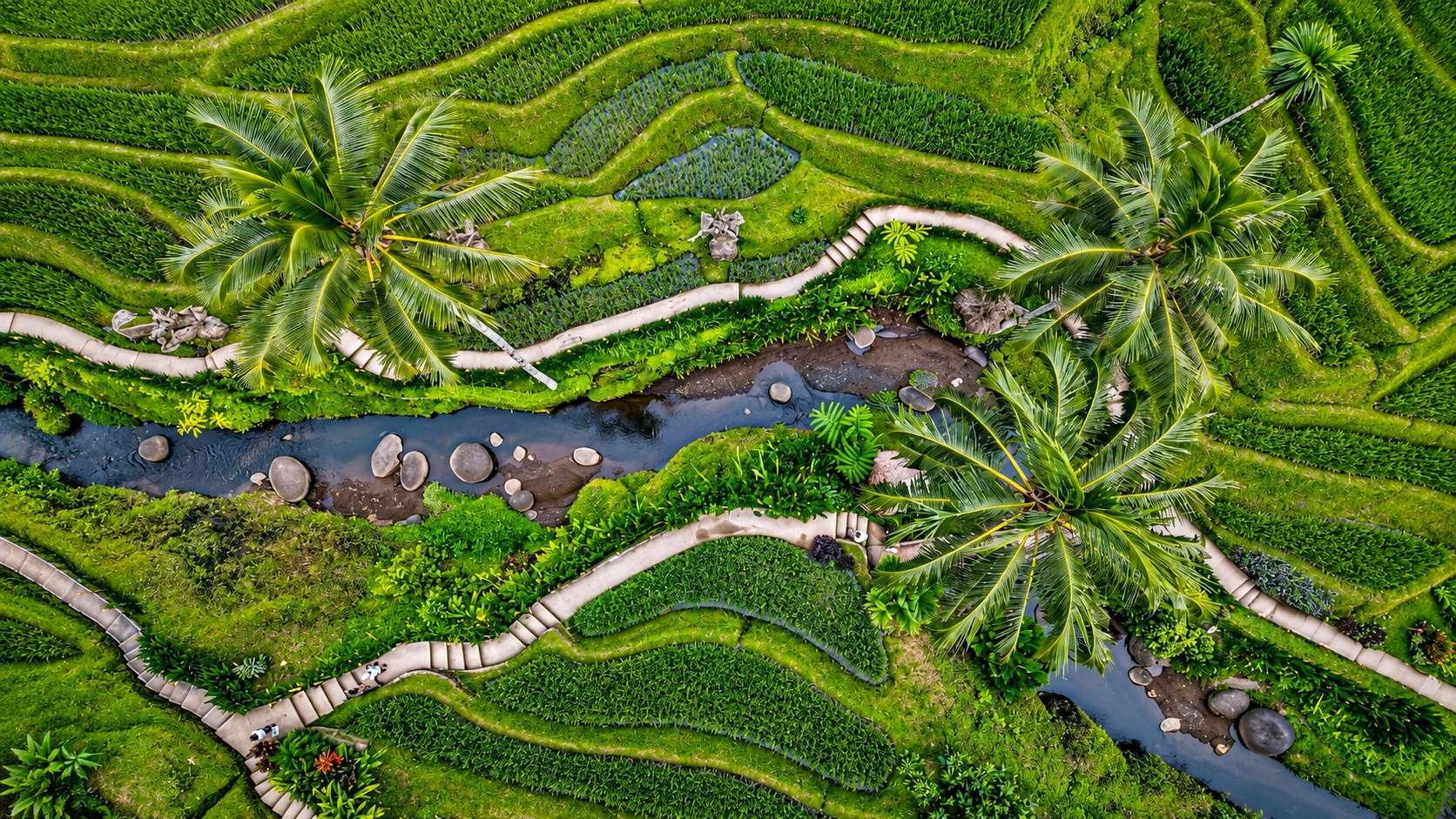
Canals, tunnels, and weirs carry water from springs and rivers towards the rice terraces. The system works across entire watersheds rather than a single field or village.
This interconnected approach has helped shape Bali’s distinctive stepped agricultural landscapes over many generations.
More Than Irrigation
Subak is not only about moving water.
The system is closely connected to Tri Hita Karana. This Balinese philosophy centres on harmony between the spiritual world, people, and nature.
Within the subak landscape, you can see these principles in the relationship between farmers, water, temples, and the environment. Rituals and offerings accompany agricultural activities. Meanwhile, water management depends on cooperation between communities.
In this sense, subak brings practical knowledge and cultural traditions together in one living system.
The Water Temples of Bali
Water temples are an important part of the subak system.
Temples mark important points within the water network, from the sources of water to its journey towards agricultural areas. In addition, the rituals associated with these temples reinforce the relationship between people, agriculture, and the natural environment.
Several important water temples form part of Bali’s UNESCO-listed cultural landscape. Examples include Pura Ulun Danu Batur and Pura Taman Ayun.
Why Are Bali’s Rice Terraces Important?
The beauty of Bali’s rice terraces is closely connected to the system behind them.
The UNESCO-listed Cultural Landscape of Bali Province covers around 19,500 hectares. It includes rice terraces, water temples, forests, villages, canals, and other elements connected to the subak system.
The landscape demonstrates how agriculture can become deeply connected with cultural and spiritual practices. It also shows how communities have worked collectively to manage natural resources across generations.
This is why a rice terrace in Bali can be more than a scenic backdrop. It is part of a much larger cultural landscape.
Subak and the Meaning of Balance
Perhaps the most interesting part of subak is the idea that agriculture does not exist separately from community, spirituality, or nature.
Water sustains the rice. Farmers depend on one another to manage it. Temples connect the agricultural cycle with spiritual practices. Finally, the surrounding environment provides the resources that make cultivation possible.
Together, these relationships reflect the principle of Tri Hita Karana. This principle emphasises balance between people, nature, and the spiritual realm.
A Living Tradition
Subak may have ancient roots, but it is not simply a historical system preserved for visitors.
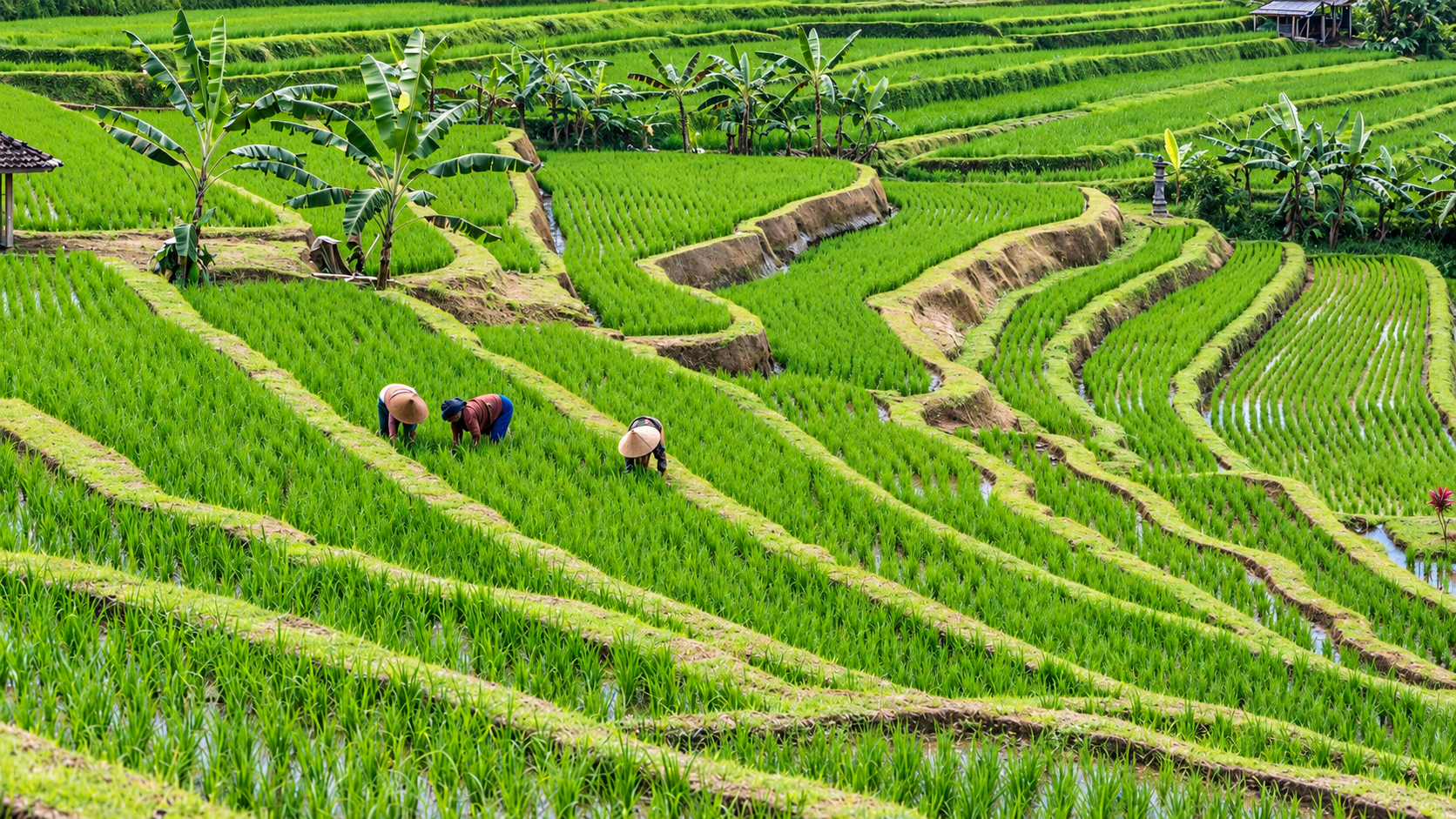
The UNESCO-listed landscapes remain living agricultural areas. Local communities continue to farm and maintain the landscape there. UNESCO notes that the sites remain in active use. It also notes that the traditional subak system continues to play a role in their communal management.
For travellers, this offers another way to understand Bali. The rice terraces are not simply beautiful places to photograph. Instead, they are part of a living system shaped by generations of knowledge, cooperation, and connection with the environment.
Seeing Bali Beyond the Landscape
The next time you see Bali’s famous rice terraces, look beyond the layers of green fields.
Behind them is a centuries-old system of water management, community cooperation, temple networks, and cultural beliefs. This system continues to influence the island’s landscape.
Subak offers a glimpse into a different way of understanding Bali. In this view, water connects agriculture, community, spirituality, and nature.
And perhaps that is what makes the island’s rice terraces so fascinating. Their beauty is not only in what you see, but also in the system that has allowed that landscape to exist for generations.